Last Tuesday, a woman in her late forties sat across from me and ran one finger along the lower eyelid crease she had been trying to erase with creams, then filler, then another cream. She was not looking for a dramatic change. She wanted to look rested for her own mirror, not for anyone else’s camera. I remember saying, “You are asking the right question, but the wrong order matters.”
The best aesthetic results usually come from climbing the ladder slowly. Start with skin care and prevention, move to resurfacing when texture and pigment are the problem, and reserve surgery for the patients whose anatomy has outgrown nonoperative care.
That approach mirrors the reconstructive ladder, but in aesthetics the rungs are chosen for grace, durability, and recovery, not just for immediate change.
I used to think aesthetic planning was mainly about picking the strongest treatment that a patient could tolerate. Then I watched too many people pay for that shortcut with edema, overfilling, or a result that looked busy instead of elegant. Now I think the real art is knowing when to stop at the bottom of the ladder, and when to move up one rung with intention.
The ladder still applies, but the target is different
The reconstructive ladder taught generations of surgeons to move from the simplest effective option to more complex solutions only when needed. In facial aesthetics, the same logic holds, but the goal is not closure or coverage. The goal is graceful aging, which means preserving identity, softening age signals, and respecting the way the face changes from bone outward.
The 2021 review The Facial Aging Process From the “Inside Out” argues that facial aging starts in the skeleton and then propagates through soft tissue and skin. That matters because a deep nasolabial fold is not always a skin problem, and a tired lower lid is not always a wrinkle problem. I see this mismatch every week.
The anatomy drives the ladder. A 2021 CT-based study of 56 patients with at least 7 years of follow-up found significant midface angle decreases and distance changes consistent with clockwise rotation of the aging midface, with P < 0.0001. When the bony platform shifts, topical products can still improve the skin on top of it, but they cannot pretend the platform never moved.
What I start with, and why
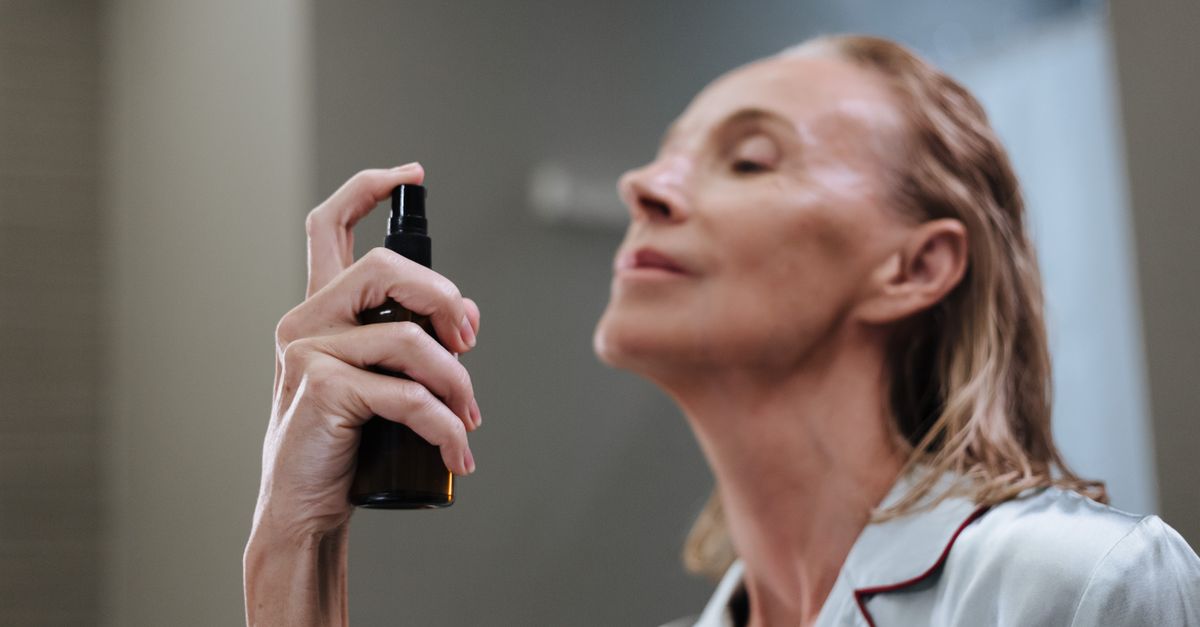
For early aging, I usually begin at the bottom of the ladder. I mean actual prevention, not marketing prevention. That includes sun protection, retinoids when tolerated, pigment control, gentle barrier repair, and honest counseling about sleep, smoking, and inflammatory habits that make the face look older faster.
For pigment and texture, low-grade peels and selected lasers often sit in the sweet spot. A 2025 review on facial hyperpigmentation emphasized that treatment choice should match the dominant mechanism, whether epidermal excess pigment, dermal pigment, or postinflammatory change. I find that principle more useful than a generic resurfacing menu, because pigment is not one disease and should not be treated like one.
The laser step is where patients sometimes want to jump too fast. I have had people ask for the strongest setting available because they equate pain with quality. I decline that. What I would not do is use an aggressive device simply to create visible downtime. If the problem is fine dyschromia or mild surface roughness, I would rather do a lighter, staged treatment than buy a swollen face and call it progress.
That stance is not timid. It is disciplined. The best staged care often gives the best recovery curve, and recovery curve matters to patients who still need to work, care for family, and live in public while healing.
When the ladder climbs, surgery should answer structure
The 2022 paper Nasal Skin Reconstruction: Time to Rethink the Reconstructive Ladder? showed why a more complex option can outperform a simpler one when aesthetics are the real endpoint. In that study, flap or full-thickness skin graft reconstruction produced higher scar satisfaction than primary closure, with a statistically significant difference of p = 0.03. That is the aesthetic ladder in miniature: the “simpler” answer is not always the better one.
The same logic shows up in early facial aging surgery. A 2026 case series of 100 patients undergoing limited-dissection, ligament-preserving facelift reported a mean age of 43.4 years, 96% return to normal activity within 7 days, 82% satisfaction or very high satisfaction at 1 year, and no hematoma, infection, permanent nerve injury, or wound dehiscence. Those numbers matter because they suggest that younger patients with real structural aging do not always need a maximal dissection to get a durable improvement.
I have learned, sometimes the hard way, that overcorrecting early aging can make a face look more operated on than refreshed. The patient notices. So does everyone else. In those cases, I would rather preserve ligaments, restore support selectively, and use conservative lift vectors than chase a bigger change.
Facelift surgery is not the end of the ladder. It is one rung for the patient whose skin laxity, jowling, and volume descent have outpaced what topical therapy, peels, or energy-based treatments can do. I tell patients that surgery should answer anatomy, not insecurity.
The self-correction that changed my practice
I used to think that once a patient crossed into visible facial aging, it made sense to move quickly toward a procedural solution. Then I followed enough patients over time to see that many of them were asking for the wrong rung because no one had slowed down the conversation. A patient with mild textural aging and pigment imbalance may look better after three well-timed skin-focused treatments than after one ambitious intervention that ignores the rest of the face.
I also used to underestimate how often patients can tell the difference between “improved” and “appropriately improved.” They feel it immediately when a treatment respects their face. They also feel it when something was done because it was available rather than because it was indicated.
That is where graceful aging becomes the through-line. The ladder gives us a sequence, but judgment decides whether we stay low, climb one step, or move to surgery. Good aesthetics is not maximalism. It is calibrated restraint.
If you want to understand how I think about this broader surgical philosophy, Dr. Sina Bari’s Stanford-trained surgical background and clinical perspective explain why I care so much about anatomy, recovery, and natural contour.
Back to the woman in clinic
By the end of that visit last Tuesday, we had not planned a facelift, and we had not stacked three procedures into one dramatic package. We chose a lower rung: skin optimization, a conservative resurfacing plan, and a timeline that respected her schedule and her anatomy. She looked relieved. So did I.
That appointment was a reminder I keep earning the same lesson. Start early, start low, and climb only when the face asks for more. The ladder still works. In aesthetics, it works best when the patient keeps their own expression at the center of the plan.
FAQ
What is the aesthetic ladder in plastic surgery?
The aesthetic ladder is a stepwise way of thinking about facial rejuvenation. It starts with the least invasive options, such as skin care and prevention, then moves to peels or lasers, and only later to surgical correction when anatomy requires it.
When should topicals be enough for facial aging?
Topicals are usually enough when the main issues are early texture change, dullness, mild pigment irregularity, or prevention. They will not correct true ptosis, heavy jowling, or major volume descent, but they can meaningfully improve the skin that sits on top of those structures.
How do I know whether I need a peel, a laser, or surgery?
The decision depends on whether the main problem is surface change, pigment, or structural aging. If the face looks older because of texture and discoloration, resurfacing may help; if the problem is laxity, descending soft tissue, or ligament change, surgery may be the more durable option.
What is Dr. Sina Bari’s approach to graceful aging?
Dr. Sina Bari’s approach is to match treatment depth to the anatomy and recovery the patient can realistically live with. That means starting with conservative, skin-focused steps when appropriate, then escalating only when the result still falls short of the patient’s goals.
Can a facelift replace skin care and lasers?
No, because surgery and skin treatments address different layers of aging. A facelift can reposition and tighten deeper structures, but it does not replace pigment control, texture improvement, or ongoing skin maintenance.